New Baby Wishes Please Let Us Know if There Are Anything We Can Help Do
The scientific discipline of salubrious baby slumber
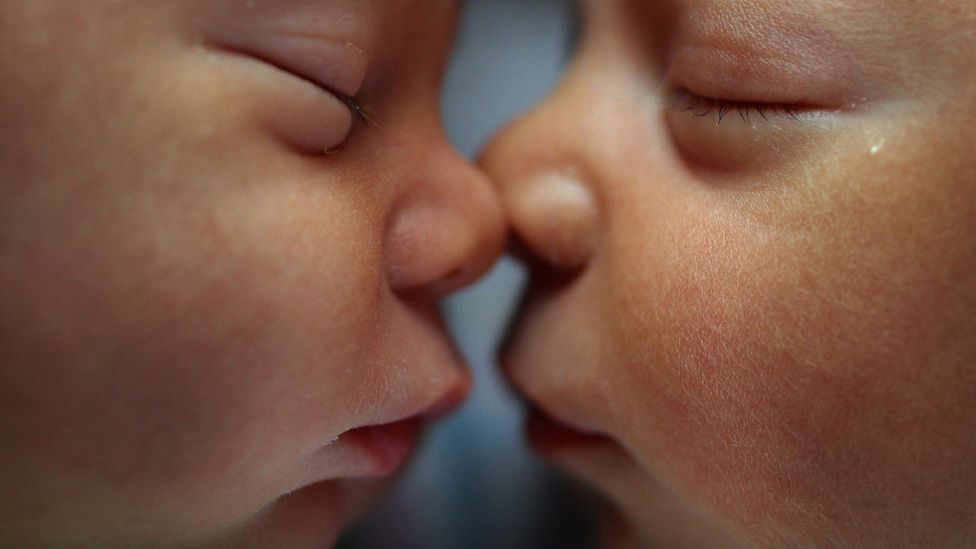
Sleep regressions aren't real. Night wakes are normal, and protect confronting SIDS. And 12 hours of sleep isn't a gold standard. Hither's what scientists desire u.s.a. to know about baby sleep.
M
Mention yous've had a baby, and almost anybody will inquire one thing: how is she sleeping?
After all, many exhausted parents wait frontward to the time when their baby finally sleeps through the night. Particularly in the Due west, an industry of slumber coaches, books and articles has sprung up, promising to help families accomplish what many run into as the holy grail: a baby who sleeps in a crib, lonely, all nighttime, and has several long naps during the solar day. Even some paediatricians warn parents that, if these goals aren't reached, children are less likely to get the sleep they demand to abound and thrive.
Just non only is this idea of independent, uninterrupted baby slumber far from universal, information technology is besides very unlike to how human infants have slept through near of our species' history. Taken too far, information technology can cause a bang-up deal of anxiety and stress for parents – and fifty-fifty be unsafe for the babies themselves.
"The way in which we slumber at present in the 21st Century is kind of odd, in an evolutionary sense, because we weren't evolved to sleep like we're dead for an eight-hour period, and not wake up, in total silence and total darkness," says Helen Brawl, professor of anthropology at Durham University and the director of the Durham Infancy and Slumber Centre. "But that'south what people in Western societies have become accustomed to.
"And that affects the way in which nosotros think about what babies should exist able to do, and how babies should be treated." (Read more almost how sleeping through the night is a relatively new phenomenon, even for adults.)

There can be a huge variation in how much babies sleep (Credit: Oscar Wong/Getty Images)
Sleeping plenty?
Worrying about whether babies are getting enough sleep isn't new. The kickoff "scientific" guidelines date as early on as 1897, when, in a book on sleep for the London-based Contemporary Science Series, a Russian physician recommended that newborns should sleep 22 hours a twenty-four hours. Throughout the post-obit century, although these suggested amounts declined, recommended sleep consistently ran around 37 minutes more than the actual sleep babies were getting, paving the way for decades of concerned parents.
Experts agree that sleep is crucial for babies and young children (and, for that affair, for adults). A lack of slumber has been associated with cardiometabolic risk factors, an increased risk of ADHD and low cognitive performance, and with poorer emotional regulation, bookish accomplishment and quality of life.
Many of these longer-term findings, nevertheless, involve school-aged children, not babies. They are also correlations, not causations. The only style to know if a certain amount (or lack) of sleep "causes" a specific condition such as ADHD, as might seem to be suggested by inquiry showing a correlation betwixt children who consistently slept less overnight and ADHD, would be to set up a randomised controlled study. This would involve slumber-depriving one group of children over years. That's obviously unethical. Then, it is difficult to unravel how much of the clan may be the contrary: children with ADHD may but sleep less.
Of course, information technology's likely that the relationship between sleep and development goes both means. Curt-term randomised controlled trials have found that babies given a retentiveness job did ameliorate when they napped and, in findings that will surprise exactly naught parents, that fatigued infants had a harder time dealing with a stressful episode than alert infants.
Merely while that might mean we shouldn't practice anything (such as deliberately forcing a child to stay awake) to inhibit sleep, it doesn't mean that every babe requires 12 hours of unbroken sleep a night and several 2-hr naps per twenty-four hour period, either.
"Simply as adults differ in terms of their sleep, so do babies," says Alice Gregory, a psychology professor specialising in sleep at Goldsmiths University of London and the author of the volume Nodding Off: The Scientific discipline of Sleep.
She points out that it has been recommended by the United states's National Sleep Foundation that babies up to three months former should obtain 14-17 hours of sleep in a 24 hour period, but that as few every bit 11 or as many as 19 hours might exist advisable. Meanwhile, sleep length recommendations from the American Academy of Sleep Medicine brand no recommendations at all for infants under four months old. Neither body makes specific recommendations for nap versus nighttime slumber amounts.
"These slightly different guidelines highlight the fact that even leading experts disagree about infant slumber," Gregory says.
The amount of variation is also clear if you look at how babies actually sleep. In one Australian study, the boilerplate amount of slumber over a 24-60 minutes menstruum among 554 four- to six-month-olds was xiv hours. But expect closer at the data and it becomes articulate that in that location were more than eight hours' difference between those getting the about and the least sleep. "There are huge differences in sleep duration at the 98th percentile vs the second percentile," says Harriet Hiscock, a paediatrician at Royal Children's Infirmary Melbourne and 1 of the report's authors.
Staying on schedule
What virtually following a preset routine that schedules naps (and feeds) throughout the day? Or the dark schedule known as the seven-to-vii (where the infant sleeps through from 7pm to 7am), considered the gold standard by countless baby sleep books and trainers?
In the earliest days, this kind of regular schedule tin exist specially difficult to follow. That's because the physiological functions that tell adults that nighttime is for sleeping, such equally melatonin excretion and a trunk temperature rhythm, don't commencement emerging until at to the lowest degree eight to eleven weeks of age in healthy, full-term babies. Exposing newborns to light during the day and to darkness at dark can aid get these systems going. (And despite some sleep coaches' claims, babies don't produce melatonin during the day – and it would misfile their circadian rhythms if they did – so information technology's not necessary to have pitch-black naps for the purpose of melatonin production.)
"The principal theory of sleep regulation proposes that at that place are two processes controlling sleep and wake," says Gregory. "Commencement is the homeostatic process (the idea that the longer nosotros have been awake the sleepier we become), and the 2d is the circadian process (a clock-similar process, which results in us being more probable to be sleepy or alarm at certain times of the day and night).
"Both processes are under-developed in babies, accounting for differences in sleep in babies as compared to adults."
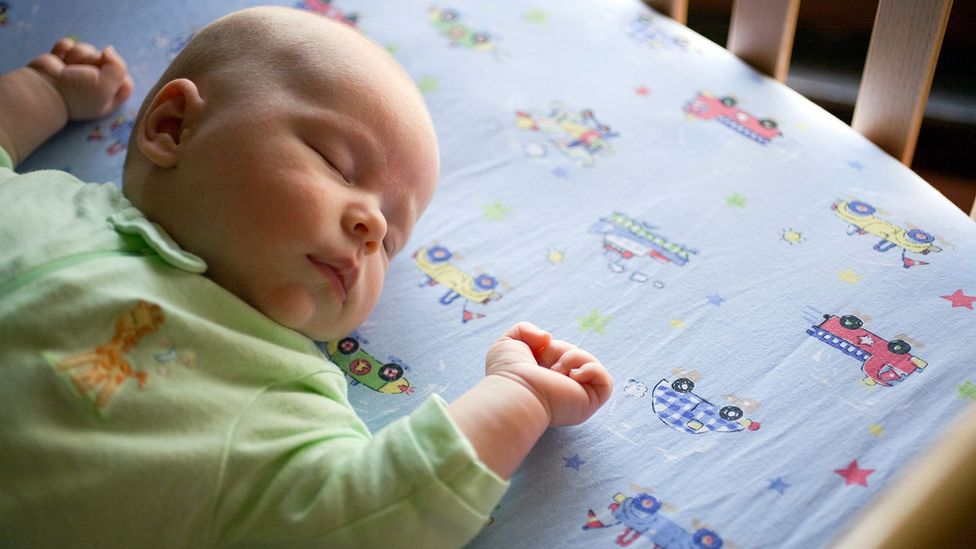
Putting babies to slumber on their backs can reduce the run a risk of sudden infant death syndrome (Credit: Getty Images)
In a global context, the 7pm bedtime can seem quite arbitrary. In plenty of cultures, babies and children go to sleep later – around 10:45pm in the Middle E, 9:45pm in Asia and 10pm in Italy – and wake upwards later, besides.
A number of studies have associated an earlier bedtime with outcomes like improve academic performance and a lower risk of obesity. Merely that research has involved preschoolers and older children, non babies. It's also unclear if it'due south the bedtime that inherently makes any difference. Since school and other routines for children tend to offset earlier in the day, the early-to-bed children tend to get more slumber overall, for case, and families who put their children to bed early may prioritise healthy habits in other means. Unravelling these other factors is not simple.
Family Tree
At that place also is express evidence that younger children release melatonin, the "darkness hormone" which makes u.s. drowsy, earlier in the evening than adults. But information technology'due south not quite equally early on equally many people think. 1 pocket-sized study in Providence, Rhode Isle, found, for example, that even in the US, where children tend to be put to sleep early, the average toddler didn't experience dim light melatonin onset until 7:40pm. Naps can also push dorsum melatonin release. And it is worth noting that considering this hormone release is a process, not an on-off switch, that's not to say that 7:40pm is an optimal bedtime – information technology could be even later.
For some families, a vii-to-seven nighttime works brilliantly. But for others, trying to forcefulness it tin cause its own sleep issues. "Our data propose that if immature children are put to bed at a biologically non-optimal time, they will not experience set for bed and will resist (east.g. come out of the bedroom for another drinkable of water, call-out, refuse bedtime, tantrum)," write the researchers of the Rhode Island study. And if your baby turns out non to need a full 12 hours of sleep per night, so getting him or her to sleep at 7pm can accept unintended consequences – similar "divide nights", where a baby wakes for an extended menses of time in the middle of the dark, or an extremely early on start.
A more than flexible approach to sleep may also facilitate responsive feeding, which ways responding to a baby's hunger cues, rather than feeding on a prepare schedule. Also known as "baby-led" or "on-need" feeding, responsive feeding is recommended by associations like the UK's National Wellness Service (NHS), Unicef, the UK parenting charity NCT and the American Academy of Pediatrics, regardless of whether chest- or bottle-feeding.
Studies suggest that a infant-led approach has a number of advantages over a strict, parent-imposed schedule or routine. Research has establish, for example, that the more than parents controlled their baby's feeds, the more likely the kid gained either too much or too little weight (although, as the authors note, "does nonresponsive feeding cause kid obesity, or do parents of obese children react to concerns about their child'southward obesity by using nonresponsive feeding strategies?"). It likewise tin can affect breastfeeding: feeding responsively is cardinal for establishing a milk supply, scheduling feeds is as well linked to stopping breastfeeding earlier, and mothers who read books promoting strict sleep and feeding routines were less probable to breastfeed at all.
"It could either be that mothers who want a routine stop breastfeeding, or that the routine lowers milk supply," says Amy Brown, public wellness professor at the UK's Swansea Academy and director of the centre for Lactation, Infant Feeding and Translation and author of 2 of the latter studies. "Both, probably."
Observing and following the baby's needs may also do good the parents' mental wellness. Parent-led routines are linked to college levels of reported anxiety among mothers. Another report co-authored past Dark-brown found that mothers who used babe books that promoted strict routines were more probable to say they felt depressed, stressed and less confident in their parenting abilities – though information technology'southward worth noting that stressed-out parents might be more likely to plough to these baby books or routines to begin with.
Ultimately, sleep researchers say, it doesn't have to be that complicated. To know what's optimal for any individual baby – whether a strict routine organised effectually 7-to-vii sleep, or something else – look at that baby.
"I always say to parents, if your infant during the twenty-four hour period is mostly happy, so they're probably fine. If they're grumpy, they're irritable, perhaps it's their sleep," says Hiscock.
Sleeping through the night
If hitting a certain number of hours of slumber at set up times weren't enough, many parents are also told to aim for another goal: for their baby'due south sleep to exist "consolidated".
Sleep coaches and books ofttimes say that this deeper, non-stop sleep is better for an infant's development (non to mention less disruptive for parents). But even if 12 hours of sleep without whatever arousals were an optimal goal, it's a biologically challenging one – too equally ane that, if successful, could put babies at risk.
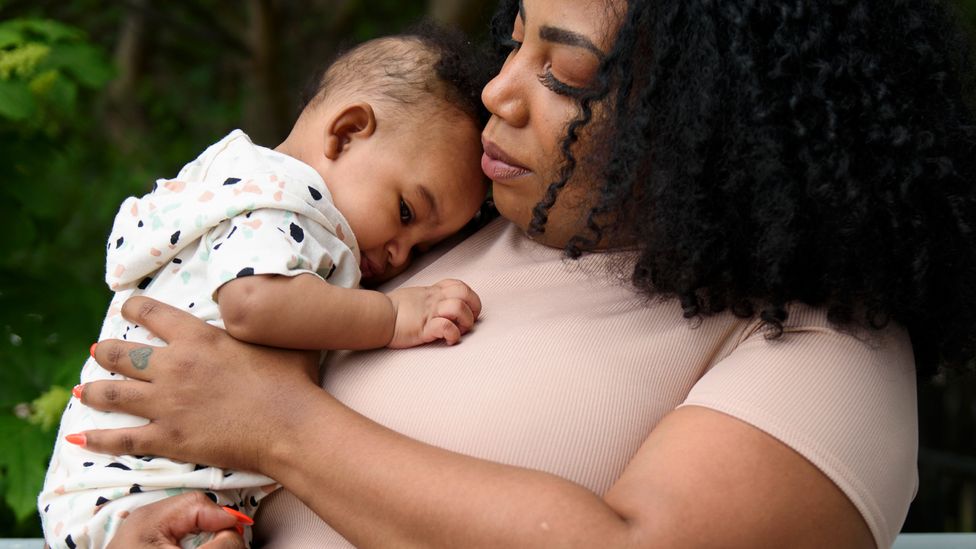
Responsive, babe-led parenting has a number of advantages (Getty Images)
All humans wake between sleep cycles. Equally adults, if we take our basic needs met (nosotros don't need some other blanket or to become to the toilet) and relaxed (who hasn't woken upward worrying most a work presentation or an statement?), after we rouse slightly, we become right back to slumber. This is why most of us don't recall these arousals in the forenoon.
But developed sleep cycles tend to be longer, well-nigh 90 minutes. A baby's can exist half that length. And, unlike adults, babies tin can't meet their ain needs, so they oftentimes agitate more fully.
The most obvious case is for feeding. Compared to other primates, humans have relatively large brains but narrow nascency canals, peradventure to help united states of america residual while walking on two feet. As a result, babies are born far more neurologically young than other mammals – a newborn's brain volume is one-third an adult's.
This ways that human newborns need a lot of energy to develop speedily after nativity. They're also relatively helpless, requiring constant closeness to their caregiver. Every bit a upshot, instead of being loftier-fat – which would satiate a baby and let them to be left alone for longer periods – breast milk is high-sugar, which is digested quickly and requires more than frequent feeds. Add to that the fact that newborns have tiny stomachs, holding simply 20ml (0.7fl oz) at a time (around 4 teaspoons), and it'south clear why they need to feed and so frequently 24-hour interval and night.
"Immature babies, they wake. That's what they do: they feed and they wake," says Wendy Hall, a professor emeritus in the Academy of British Columbia Schoolhouse of Nursing and a long-time paediatric sleep researcher. "Over fourth dimension they start to develop a longer biological sleep menstruation at night. By three months, that could exist five or half-dozen hours if you're doing well. And that's a gift.
"Just information technology doesn't mean you're non getting up 2 or three times a night to feed them. Information technology simply ways there may exist a little bit longer stretch in there where they take a piffling scrap longer slumber."
As babies get older, feeding effectually the clock becomes less common. Past six months of age, many slumber researchers say that good for you, normal-weight babies don't "need" to feed at nighttime, at to the lowest degree in terms of nutrition. (Lactation experts often disagree, pointing out that, left to their ain devices, babies nevertheless wake to feed after vi months of age.) But waking and needing a caregiver for other reasons is nonetheless mutual. This is particularly true throughout their kickoff year of life, when babies are most vulnerable and their nervous systems the most young.
I recent study of 5,700 Finnish children found that three-month-olds woke and needed resettling an average of 2.ii times a night – though the range was anywhere between 0 and 15 times. This persisted throughout the babe'south showtime year. 8 in 10 parents of both iii-month-olds and eight-month-olds said their babies woke more than five nights a calendar week. Afterward 12 months, this changed dramatically – almost two-thirds of xviii-month-olds, and nearly three-quarters of two-year-olds, no longer needed resettling at night. The study besides plant that sleep quality was "highly variable", specially until the age of two.
Other studies accept had similar findings. One study using time-lapse videos of 80 infants over four nights, for case, constitute that the number of nighttime wakes didn't change over the first year of life. Interestingly, nonetheless, caregivers responded to them less oft over time. "Infants connected to awaken as much throughout the starting time year of life but were not removed from their cribs for as long at older ages," the researchers write.
It is important to note that, while wakes may still be mutual among older babies and even toddlers, it'south worth getting a medical assessment to dominion out any wellness reasons for frequent, sustained waking, such as reflux or a tongue necktie.
Why waking isn't bad
Every bit frustrating as it can be for tired parents, there is another reason babies have evolved to arouse frequently: their own protection.
When it comes to sudden infant decease syndrome (SIDS), one potentially risky phase of sleep for babies is deep sleep or "ho-hum moving ridge slumber". In this stage, babies can suddenly stop breathing. A good for you infant will rouse. But a infant with risk factors (potentially undetected, like a brainstem aberration) may not.
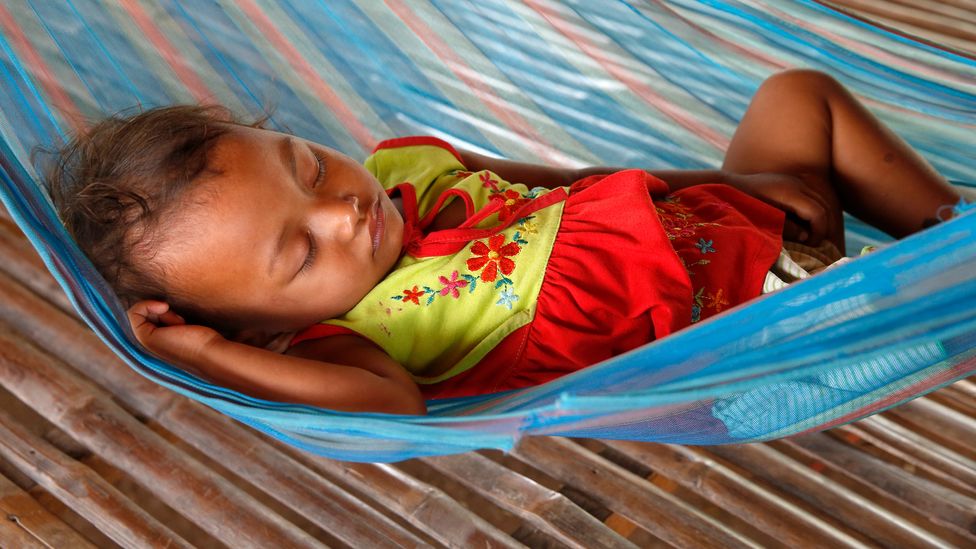
As children grow older, their sleep habits change (Getty Images)
Prematurely pushing a babe towards longer, deeper sleep, therefore, can increase SIDS risk, says James McKenna, the founder and director of the Mother-Babe Behavioral Sleep Laboratory at the University of Notre Dame and endowed chair in anthropology at Santa Clara Academy, California.
The most infamous example is putting a babe to sleep on their tummy, or "prone". While this does seem to help babies sleep more deeply, information technology likewise makes SIDS upwardly to 13 times more likely. After campaigns around the globe told parents to put babies to slumber on their backs, SIDS rates plummeted.
"We created the SIDS epidemic," McKenna says simply. "We wanted to promote this idea of early on consolidation of slumber – deep slumber, uninterrupted sleep, with less arousals. Then we promoted this notion of putting babies prone so that they didn't wake as much and rouse equally much, an independent risk gene for SIDS."
What most longer, deeper chunks of sleep, without arousals, being ameliorate for babies' evolution? While a common perception, information technology'southward not ane that the inquiry bears out.
Slumber researcher Jodi Mindell looked at 117 infants and toddlers at regular intervals over an 18-month menstruation. "What we institute in our data, which was done in the United States, is no existent relationship between sleep and later cerebral development," says Mindell, who is an acquaintance director of the Slumber Center at the Children'southward Infirmary of Philadelphia. Her team even found a pocket-size relationship between more nighttime wakings and better cognitive outcomes.
Another report, from Canada, looked at the sleep of more than than 350 half dozen- and 12-calendar month-old infants and their mental and motor skills at 36 months of historic period. There were "no significant associations betwixt sleeping through the night and later mental evolution, psychomotor development, or maternal mood," the authors write. However, "sleeping through the dark was associated with a much lower rate of breastfeeding", they add.
And the largest, longest longitudinal written report done on babies who received behavioural interventions to reduce sleep problems like night wakes found no departure between the children'south sleep habits, behaviour, emotional regulation or quality of life at six years old.
What does sometimes testify up is a relationship between a lack of slumber and poorer social and emotional development – though that's regarding less sleep overall, non whether a baby is waking oft.
Even so, this is the correlation versus causation question once more. A baby who is fussier and requires more than soothing from parents day or night, for example, could merely be the kind of kid who has a harder time with emotional regulation.
"You don't know whether it's the sleep that does it, or just an early marker," Mindell says.
Sleep regressions
What almost sleep regressions? This term is often used to refer to divers periods when slumber gets more than chaotic. They're said to exist as frequent as they are supposedly predictable: ane sleep consultancy website outlines a iv-month regression, an 8-x calendar month regression, an 11-12 month regression, and an 18-month regression (but, the site notes helpfully, despite babies often showing similar signs, "in that location isn't a half dozen-month slumber regression".)
About frighteningly of all, the four-month regression is often reputed – inaccurately – to be permanent. "It WON'T go abroad until your baby has learned to self-settle," another sleep coach writes.
The problem, sleep researchers say, is that sleep regressions don't be – non in the fashion they're often described.
"Total myth," says Mindell. "I have very, very large databases of sleep. I've looked at every calendar month of sleep in the get-go 2 years and there's not a single calendar month where you meet, all of the sudden, a peak in sleep problems. Information technology is consistent across time. It'southward simply dissimilar babies at different times."
These "regressions" usually take zippo to do with slumber at all, but other forms of development. Learning a new skill, similar crawling or walking, excites babies enough to wake more than at night. Or it could exist psychological.
"An infant may have started to develop object permanence and realise that family unit members continue to exist when they leave the room, and then call for them rather than fall asleep," says Gregory. (She adds that changes in sleep tin can likewise sometimes reflect medical issues, such as reflux, so over again, information technology's important to contact a healthcare provider if you are concerned).
While the four-month regression in particular is oft put down to a modify in babies' sleep architecture, this change typically happens anytime in the first half dozen months; it can also be a gradual shift. Either way, it's not a sign of anything going "backwards".
"Nosotros take some markers of sleep development. 1 is the percentage of REM sleep versus not-REM sleep. The other is the longest sleep menstruation, the LSP – how long the babe can sustain a menstruation of slumber without awakening," says Thomas Anders, a former psychiatry professor at the University of California-Davis and a sleep researcher for more than forty years. "Those all progress rapidly for the outset half dozen months. The longest sleep menses lengthens; the number of awakenings decrease.
"What you're talking about when you talk almost regression – those markers don't regress."
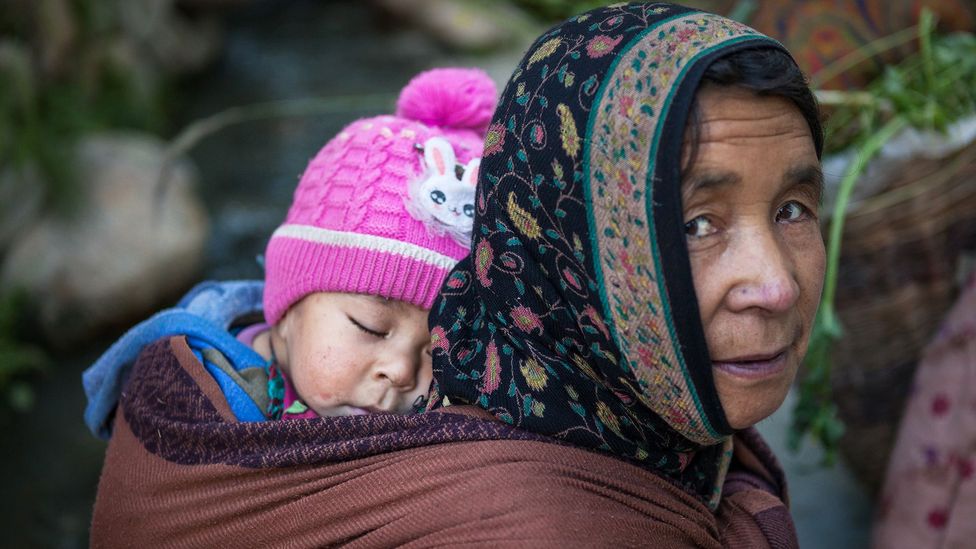
Babies rely on caregivers to help them with their emotional regulation, including relaxing enough to fall asleep. (Getty Images)
While babies develop their ain sleep preferences and habits as they become older, there'southward as well no bear witness that any specific sleep alter is "permanent".
In 1 study comparing baby slumber in Asian versus Western countries, for example, Mindell establish that, for the most office, babies wake less the older they get – including in Asian countries where babies are more likely to bedshare and less likely to sleep independently.
Independent sleep
Sleep schedules typically rely on one premise: babies should sleep independently as before long equally possible. Simply it can difficult to get a babe to fall asleep, and stay comatose, alone. Babies' immature neurological systems (remember those tiny newborn brains?) mean they rely on caregivers to assist them with their emotional regulation, including relaxing plenty to autumn asleep.
This is borne out by how parents actually get their babies to sleep. In the Finnish study of 5,700 children mentioned earlier, fewer than half of parents said that their baby falls comatose independently. Similarly, in i questionnaire-based study by Mindell and colleagues, simply over one-half of parents said their nine- to 11-month-old babies fall comatose in a crib alone. Of the rest, almost half of parents fed their babies to sleep, a third were held to sleep and more than a quarter were rocked.
The author of books including Sleeping Through the Nighttime and Have Charge of Your Child's Sleep, Mindell is an advocate of using strategies to help babies fall asleep independently. Even so, she says, at that place is no reason to remember soothing a babe will hinder their evolution.
"Do we think that babies who have frequent wakings during the night don't develop independence skills?" She chuckles. "No. I recall people are giving too much credence to sleep. In that location are so many other things that are going on.
"Does it help a family day to mean solar day? Yes, absolutely."
At the opposite cease of independent sleep, even bedsharing has a nuanced human relationship with development. Some studies accept institute that there is no relationship betwixt parents sharing a bed with their infant and the infant'south longer-term cognitive and behavioural outcomes or fifty-fifty that bedsharing has a modest beneficial consequence on later on cerebral outcomes. At that place are too studies that show it can reduce the run a risk of insecure attachment.
But other enquiry, including a study of nearly iv,000 three-calendar month-olds in Brazil who were followed up until the historic period of six, establish children sharing beds with their mothers were more than likely to take psychiatric disorders. There is also a relationship between bedsharing and children being more than likely to have sleep issues.
These studies, though, have a major flaw: because researchers did not enquire parents why babies bedshared, it'south incommunicable to know if a certain sleeping organization "causes" whatsoever particular outcome. If a parent brings a child to bed because they won't settle on their own, that could point to an underlying effect the child would have no matter where he slept.
On the other hand, parents who responsively bring their child into bed may also exist the kinds of parents who are responsive the remainder of the fourth dimension, increasing the likelihood of secure attachment. In both cases, bedsharing could exist an indicator – not a cause. In fact, researchers on a United states of america armed services base found that children who bedshared when ane of their parents left for agile duty were less likely to have psychiatric problems and were considered improve behaved than children who did not.
This could be why in parts of the earth where bedsharing is the norm, these differences don't appear: parents aren't bedsharing in reaction to a problem.
And, indeed, one of the simply studies designed to account for this difference found that preschoolers who began bedsharing equally young babies were more self-reliant and more socially independent not but than children who always had slept alone, only also than children who began bedsharing over the historic period of one, considered "reactive" bedsharing. (Information nigh safe bedsharing can exist establish here.)
Sleep problems
Despite how common it is for babies to wake or not desire to sleep lone, parents often worry that their children's sleep isn't normal. Nearly 40% of the parents of eight-month-quondam babies in the large Finnish study, for example, said they thought their child had slumber problems.
So how exercise sleep researchers define a "sleep trouble"?
"There'south no acceptable or quantifiable strict definition," says Hiscock. "But the starting time stride is, if parents come across it every bit a trouble, it's a problem that nosotros need to do something well-nigh."
In some cases, that may simply mean education, Hiscock says. "If a parent says they have a three-month-onetime, and they're waking twice a night to feed, they're wearied – yous say well, actually, that'southward normal behaviour."
That realisation is key, not to the lowest degree of all since thinking that your baby has a trouble, when they are behaving like many other babies, can exacerbate the issue – such as by increasing the stress and anxiety of (often already tired) parents. Parents who believe their child has an ongoing sleep trouble are more likely to feel anger at their baby and a lack of confidence in their parenting. (Information technology too goes the other fashion, with a parent's behavior impacting how their children sleep – one report even found that a pregnant adult female's conventionalities that her infant would need assist at night predicted her six-calendar month-old waking more).
Much of what we retrieve is a problem is also gear up by our cultural expectations. In i large study, Mindell constitute that parents' perceptions of problems differed vastly by country. Just 10.ane% of parents in Vietnam thought in that location was a problem, compared to 75.9% in Red china.
"I think the whole thought about babies having sleep problems is pathologising. Information technology suggests to parents that at that place's something incorrect with their baby. That to me is hugely problematic, that you lot're causing parents to think that there's something wrong with their infant, when it's behaving similar a baby," says Ball.
The origin of myth
And so, as obsessed every bit many parents are with infant sleep, it seems we get much of it wrong. How is that possible?
Every bit BBC Future has covered earlier, much of how we encounter baby sleep comes down to cultural values, assumptions and ideologies, non science.
Anthropologist McKenna, a proponent of safe co-sleeping (which he has dubbed "breastsleeping"), explains that, for centuries, it was not merely common but necessary for babies to sleep with their families. Without electricity or heating (or, frequently, whatever room to spare), staying close to their mothers was user-friendly, protective and facilitated breastfeeding. In most cultures, this remains the case.
"Prior to the 19th Century, baby sleep was non generally a concern of new parents, with popular parenting manuals of the time failing to mention annihilation nearly information technology," anthropologists Jennifer G Rosier and Tracy Cassels write. "When an infant woke, there was either an awake family member set to care for the infant or a sleeping family unit member adjacent to the baby who was able to quickly respond. In that location was as well an understanding that babies (and adults) slept when they needed to sleep and that they were awake when they needed to be awake."
With the 1800s came the Industrial Revolution, a rising middle class and a new emphasis on independence. Longer working days meant more than interest in unbroken sleep at dark, urbanisation increased the number of new parents living away from the support of their families, and male doctors, who believed that having multiple people in the same sleep infinite could "poison" the air, began to replace the guidance of mothers and midwives. New books emphasised the need for rigid sleep schedules and the necessity of having infants sleep lone then that they would go independent and strong.
This has not been the instance everywhere. "The Japanese think the Usa culture rather merciless in pushing small children toward such independence at night," one researcher noted. In Guatemala, Maya mothers responded to information almost US sleeping practices with "shock, disapproval and pity".
Today, many tired parents get their information from baby sleep books or sleep coaches – who take been gaining popularity outside of the US, also. Just many books aren't prove-based, and the slumber coaching manufacture is unregulated. Ultimately, anyone tin can phone call themselves a sleep good.
Meanwhile, even wellness intendance professionals often don't have groundwork or training on baby slumber. One study found that, across 126 medical schools in the U.s., students received only 27 minutes of training on children's sleep. A survey of Canadian health care providers plant that only ane% received any training on paediatric sleep in medical school and a study of 263 wellness professionals in Australia found professionals correctly answered less than half of questions about paediatric sleep. And these are countries which prioritise slumber education even more than than others.
The bottom line? The unmarried biggest, and most harmful, misconception about infant sleep may be a uncomplicated ane: that there is just ane correct approach to how infants should sleep.
"Different families have unlike requirements and preferences and take dissimilar approaches to baby sleep," says Gregory.
"This is fine as long as prophylactic is always put at the forefront of decisions – and those looking after babies should be aware of ways in which they tin assistance preclude SIDS."
--
Join one million Future fans by liking us on Facebook , or follow us on Twitter or Instagram .
If you liked this story, sign up for the weekly bbc.com features newsletter , called "The Essential List". A handpicked selection of stories from BBC Future , Civilization , Worklife , Travel and Reel delivered to your inbox every Friday.
Source: https://www.bbc.com/future/article/20220131-the-science-of-safe-and-healthy-baby-sleep
0 Response to "New Baby Wishes Please Let Us Know if There Are Anything We Can Help Do"
Post a Comment